

Lower Body Lift in Birmingham AL
Body Contouring for Your Specific Needs

Poor skin elasticity can cause loose skin and excess fat to develop in the lower body. Aging, pregnancy, genetics and major weight loss can all play a role in contributing to this condition.
A Lower Body Lift is used to bring tighter contours to the abdomen, hips, thighs and buttocks. This procedure removes excess sagging skin and fat, while improving the shape and tone of the underlying tissue. Patients can see a dramatic transformation of the lower body that results in a more youthful shape.
The Birmingham, AL plastic surgeons at Hedden and Gunn often perform lower body lifts for patients who have lost a large amount weight. For these patients, a body lift can be the final step in their journey to achieve slimmer, more appealing lower body contours and a newfound sense of self-confidence.
Body Lift Candidates
Lower body lifts are not intended strictly for the removal of excess fat. Liposuction alone can remove excess fat deposits where skin has good elasticity and is able to naturally conform to new body contours. In cases where skin elasticity is poor, a combination of liposuction and body lift techniques may be recommended.
In general, candidates for a lower body lift include:
- People with significant soft tissue looseness in one or multiple body areas.
- Healthy people without medical conditions that impair healing or increase surgical risks.
- People with a positive outlook and realistic goals for what a body lift can accomplish.
- Non-smokers who are committed to leading a healthy lifestyle with proper nutrition and fitness.
Your Body Lift Consultation
During your lower body lift surgery consultation be prepared to discuss:
- Your surgical goals.
- Medical conditions, drug allergies and previous medical treatments.
- Current medications, vitamins, herbal supplements, alcohol, tobacco and drug use.
- Previous surgeries.
Your body lift surgeon will also:
- Evaluate your general health status and any pre-existing health conditions or risk factors.
- Examine and measure your body, which may include detailed body measurements.
- Take photographs for your medical records.
- Discuss your body contouring options.
- Recommend a course of treatment.
- Discuss likely outcomes and any risks or potential complications.
- Answer any questions you have about your lower body lift.
Body Lift Risks and Safety
Each patient must decide if the benefits of lower body lift surgery will achieve their goals, and if the risks and potential complications are acceptable. The risks of a body lift include:
- Anesthesia risks.
- Asymmetries.
- Bleeding (hematoma).
- Deep vein thrombosis, cardiac and pulmonary complications.
- Fatty tissue under the skin might die (fat necrosis).
- Fluid accumulation.
- Infection.
- Numbness or other changes in skin sensation.
- Pain, which may persist.
- Persistent swelling in the legs.
- Poor wound healing.
- Possible need for revisionary surgery.
- Recurrent looseness of skin.
- Skin discoloration and/or prolonged swelling.
- Skin loss.
- Sutures may spontaneously surface through the skin, become visible or produce irritation and require removal.
- Unfavorable scarring.
Lower body lift risks will be fully discussed prior to your consent. It's important that you address all of your concerns about risks with your plastic surgeon. You will be asked to sign consent forms to ensure that you fully understand the procedure you will undergo and any risks or potential complications.
Preparing for a Body Lift
In preparing for body lift surgery, you may be asked to:
- Get a lab test or a medical evaluation.
- Take certain medications or adjust your current medications.
- Stop smoking.
- Avoid taking aspirin, anti-inflammatory drugs and herbal supplements, which can increase bleeding.
Lower body lifts are performed at our accredited Outpatient Surgery Facility in Birmingham, Alabama. Be sure to arrange for someone to drive you to and from surgery and stay with you for at least the first night.
Body Lift Procedure
Lower body lift surgery is performed using intravenous sedation or general anesthesia. Your surgeon will recommend the best choice for you.
Body Lift Incisions
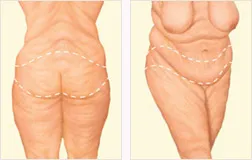
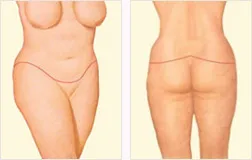
Body lift procedures require extensive incisions. The length and pattern of the incisions depend on the amount and location of excess skin to be removed. Advanced techniques usually allow incisions to be placed in strategic locations where they can be hidden by most types of clothing and swimsuits.
One common technique of complete lower body lift uses incisions similar to a bikini pattern to tighten the abdomen, groin, waist, thigh and buttock in one procedure. An incision around the body removes an apron of excess skin and fat. Tissues are then repositioned and tightened.
A combination of liposuction and surgical body lifts may be necessary to achieve an improved contour.
Deep sutures within underlying tissues help to form and support the newly shaped contours. Sutures, skin adhesives, tapes or clips may be used to close the skin incisions.
Body Lift Recovery
During your body lift surgery recovery, dressings or bandages will be applied to the incisions. Small, thin tubes may be temporarily placed under the skin to drain any excess blood that may collect.
Your plastic surgeon will give you specific instructions on how to care for yourself after surgery. Following these instructions is essential to the success of your lower body lift and recovery. The instructions may include:
- How to care for your surgical site(s) following surgery.
- Medications to apply or take orally to aid healing.
- Specific concerns to look for at the surgical site or in your general health.
- How to care for your drains.
- When to follow-up with your plastic surgeon.
Seek medical attention immediately if you experience shortness of breath, chest pains or unusual heartbeats after going home. You may require hospitalization and additional treatment if any of these complications occur.
The surgical incisions should not be subjected to excessive force, motion, swelling or abrasion during the time of healing.
Body Lift Results
Though the results of a body lift are visible almost immediately, it may take as long as 1 to 2 years for the final results to fully develop.
Some visible scars will remain, but the overall results are long-lasting if you maintain a stable weight and general fitness. It's natural to lose some firmness as your body ages.
Although good results are expected from your body lift surgery, there is no guarantee. In some situations, it may not be possible to achieve optimal results with a single surgical procedure and another surgery may be necessary.
Body Lift Words to Know
- Abdominoplasty: A surgical procedure to correct the apron of excess skin hanging over the abdomen.
- Circumferential incision: A surgical incision around the body to remove the "belt" of excess skin and fat and additional incisions that may resemble a bikini bottom pattern.
- Circumferential thigh lift: A surgical procedure to correct sagging of the outer and mid-thigh.
- General anesthesia: Medications inhaled and/or given by injection through a vein used during an operation to relieve pain and alter consciousness.
- Hematoma: Blood pooling beneath the skin.
- Intravenous sedation: Sedatives administered by injection into a vein to help you relax.
- Liposuction: Also called lipoplasty or suction lipectomy, this procedure vacuums out fat from beneath the skin's surface to reduce fullness.
- Local anesthesia: A medication injected directly to the site of an incision during an operation to relieve pain.
- Lower body lift: A surgical procedure to correct sagging of the abdomen, buttocks, groin and outer thighs.
- Medial thigh lift: A surgical procedure to correct sagging of the inner thigh.
- Sutures: Stitches used by surgeons to hold skin and tissue together.
- Tummy tuck: A surgical procedure to correct the apron of excess skin hanging over your abdomen.
Procedure Information © American Society of Plastic Surgeons

A Lower Body Lift shapes and tones the underlying tissue that supports the abdomen, thighs, flanks and buttocks.
Birmingham, AL Office & Surgery Suites
Hedden & Gunn Plastic Surgery140 Village Street
Birmingham, AL 35242
205-980-1744 or 800-HeddenMD
 *
*  *
* 
Contact Us Today
Questions About Body Contouring?
Please contact us today if you have any questions about Lower Body Lifts or other Alabama plastic surgery procedures in Birmingham.
To schedule your consultation at the earliest possible date, please call 205-980-1744.
required fields are marked with an asterisk *